No packing
Eat what IRCTC serves
Breakfast and snack on board
- MorningBreakfast sheet
- EveningSnack sheet
- DietVeg or non-veg
- CheckIs it in your fare
Guides
Language
Currency
View availabilityfrom $100 · cancel without payingTick-off checklist
In brief
Yes, IRCTC runs the onboard catering, and its menu sheet lists a breakfast at 175/- for the chair car and 250/- for Executive, but it does not say whether the meal is bundled into the fare.
Food essentials
Checklist · 9 tasks
Check things off as you go; your progress is kept on this device.
0 / 9 ready
You are all set. Only the booking is left: your date and your group.
Book a seatThe meals IRCTC serves on the train, the breakfast and evening menus for each class with their rates, what the sources do not say, and what to carry for the day in Agra.
Editorial team, tajmahaltraintour.com · Updated November 7, 2026 · Takes 6 min
The simplest answer to whether the train provides food is that it has an official catering service. The launch release says the onboard catering is organised by the Railways' public-sector company, Indian Railway Catering and Tourism Corporation, and that it arranged for train hostesses on board, with improved catering and options for different kinds of cuisines.1
The service is not a snack trolley left to chance. IRCTC publishes a menu and a rate sheet titled for the Gatiman Express, as the railway spells it, and divided by class and by meal.2 That sheet is the closest thing to an official menu that a passenger can read before boarding, and the rest of this page reads it line by line.
There is a station side of catering too. At Agra Cantt the IRCTC Executive Lounge lists meals on order, hot beverages, soft drinks and clean toilets among its complimentary and paid facilities, on Platform No-1.6 If you have time before the evening train, the lounge is one place to eat or drink without leaving the platform area.
Start with the chair car. The standard Gatimaan Express breakfast menu on the IRCTC sheet is a juice, cut fruit, a slice of brown bread with jam and butter, a main course, a muffin, cookies and a tea or coffee kit with a paper cup, at 175/- inclusive of taxes.2 The main course comes in a vegetarian version, such as aloo paratha with potato curry and pickle, or mini uttapam with vada and sambhar.
The same sheet lists a non-vegetarian main course as an alternative: a plain omelette with potato finger chips and boiled vegetables, or a chicken kathi roll.2 The sheet also lists an IRCTC approved hand sanitizer among the items. If you follow a strict diet, ask the hostess what is in a dish before you eat it, because the sheet gives dish names and not ingredient lists.
The Executive breakfast is longer. It adds cornflakes served with milk, two slices of multigrain or brown bread, and a flavoured yoghurt or mishti doi, with a main course such as aloo paratha with bhaji and pickle, and it is priced at 250/- inclusive of taxes.3 Both sheets are for what IRCTC calls the standard breakfast, so a special menu or a seasonal change would not appear here.
The sheets treat the return train as a snack service. The chair car evening snacks list a namkeen packet, a cocojal or nimbu pani cooler, a vegetarian main course such as hariyali malai kebab with mini kulchey and pindi chana, a sweet, an ice cream or a cake slice, a tea or coffee kit and two cookies, at 175/- inclusive of taxes.4
The Executive evening menu starts with a cooler and roasted nuts and offers a vegetarian main course such as veg shammi kebab with mini kulchey, or a pasta dish, with a chicken kathi roll as the non-vegetarian choice, a sweet, a sandwich and a slice of cake. Tea or coffee is on service, and the rate is 250/- inclusive of taxes.5
Taken together the sheets cover the morning run with a breakfast and the evening run with a snack. They do not give clock times for service, which is why the Gatimaan Express food timings are best learned on board from the hostess. For a day that returns at 5:50 PM, an evening snack is a light meal after a full day, not a replacement for dinner.9
Eating well on the day
No packing
Breakfast and snack on board
Full control
Light bag, water bottle
The sit-down
The planned break
Work out the bill
Pick the party size and see the from price of each full day from Delhi.
Compare all 3 options
Pick the party size and see the from price of each full day from Delhi.
≈
View≈
View≈
ViewThese from-prices come from GetYourGuide and are converted using the ECB reference rate; the exact price shows at checkout.
The sheets divide the main course into vegetarian and non-vegetarian choices on every menu, so a vegetarian traveller has a full option in both classes and both meals.2,3,4,5 The vegetarian choices are Indian and Western dishes alike, from paratha and uttapam to pasta, and the kathi rolls are the non-vegetarian staples.
The sheets do not mention vegan, gluten-free or allergy-specific dishes, and a rate sheet is not a guarantee of ingredients. If you have an allergy, pack your own food and tell the hostess about it, rather than assuming a dish is safe because of its name on a sheet. A day trip is short enough that carrying a snack is no burden.
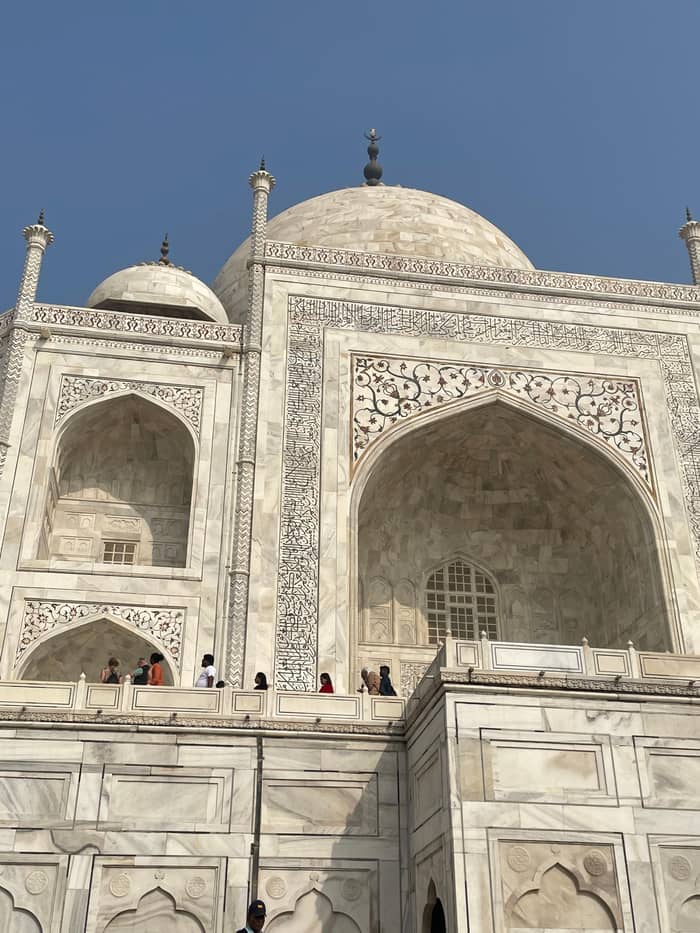
Remember also that the monument has food rules of its own. The Taj Mahal official site prohibits eating and smoking inside the monument, so a snack you carry has to be finished before the gate.7 That makes the train breakfast and the lunch stop the two sensible meal windows of the day, with the Fort and the Baby Taj left for sightseeing.
Video
TripGlobally on YouTube · Tap play to load the video; not before.
The onboard catering on this train is being organized by Railways’ PSU, namely Indian Railway Catering & Tourism Corporation (IRCTC).
Water is the main item. The Taj Mahal official site says a water bottle is allowed inside the monument, which makes a refillable bottle a good choice for a day under the Agra sun.8 Carry a small bag, because the same site asks visitors to avoid big bags and books, which can lengthen the security check.10
Leave anything electrical or sharp that you do not need. The site lists drone cameras as prohibited inside and around the Taj Mahal, and its rules ban tripods without permission from the Archaeological Survey of India.11,12 A light snack that does not need a table, such as nuts or a fruit bar, is best eaten at the station or in the car before you enter.
Finally, pack the small comforts the train and the day call for: a charged phone with your e-ticket, a scarf for the air conditioner, a hat, and cash in small notes for tips and small purchases. The rest of the day is arranged by the guide, the driver and the clock, so there is little else to carry or to plan on your own.
Sources
Questions about the train to Agra? A real person answers here.